Equine Neuroscience in Practice
Reflections on learning, perception, and what horses continue to teach us.
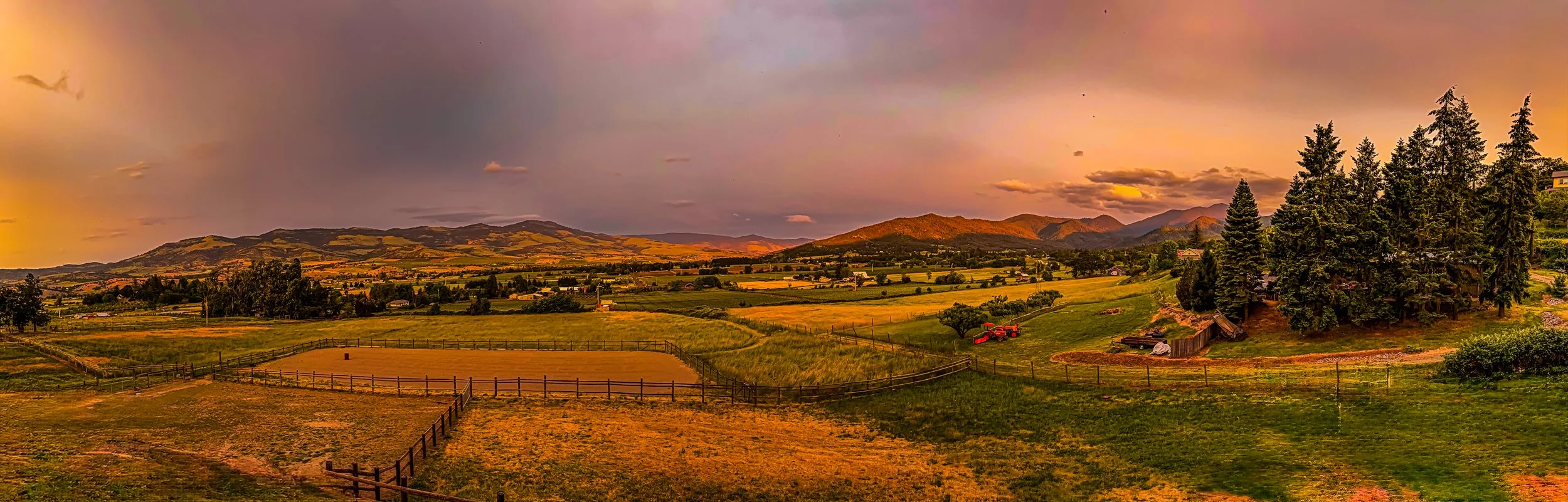
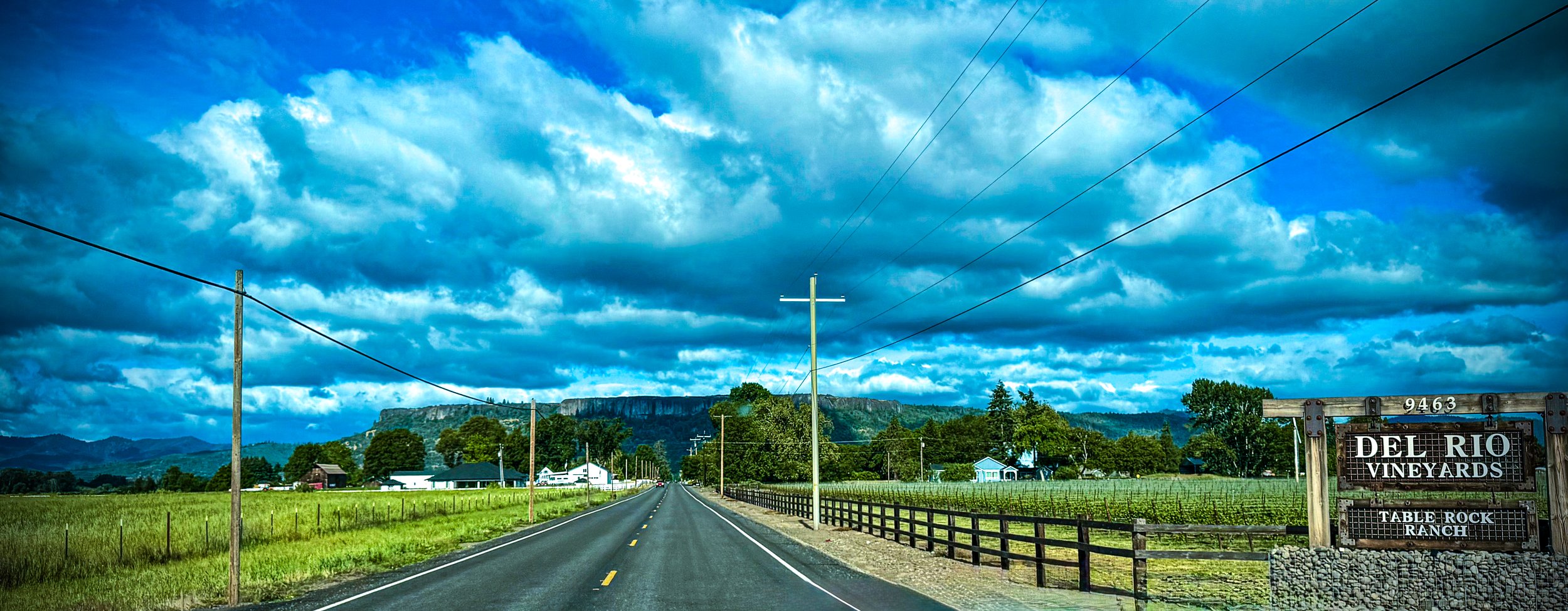
While attending the Horse Brain Science seminar, I stayed with my dear friend Lorraine in Talent, Oregon, surrounded by the beauty of Southern Oregon and many fond memories.
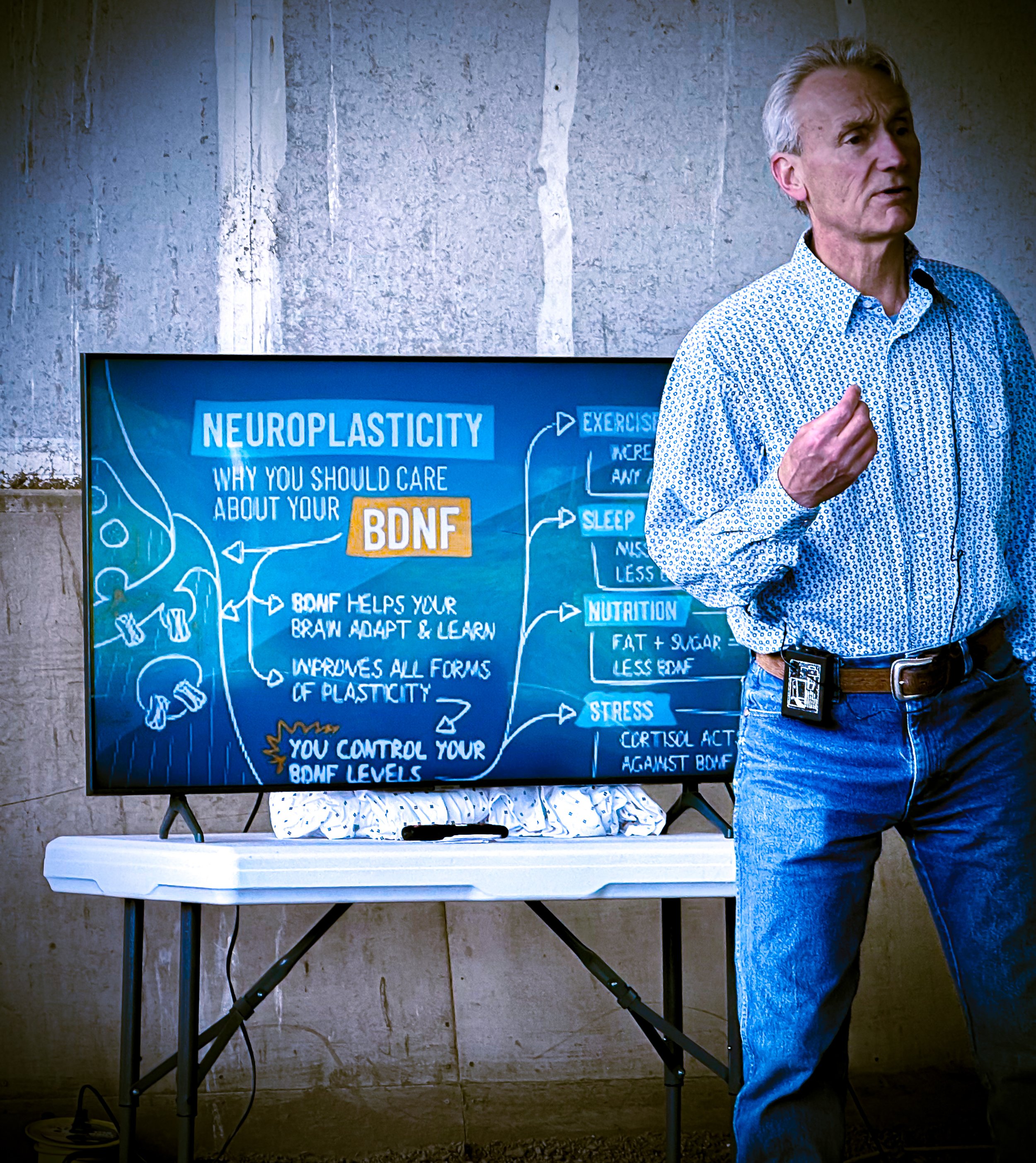
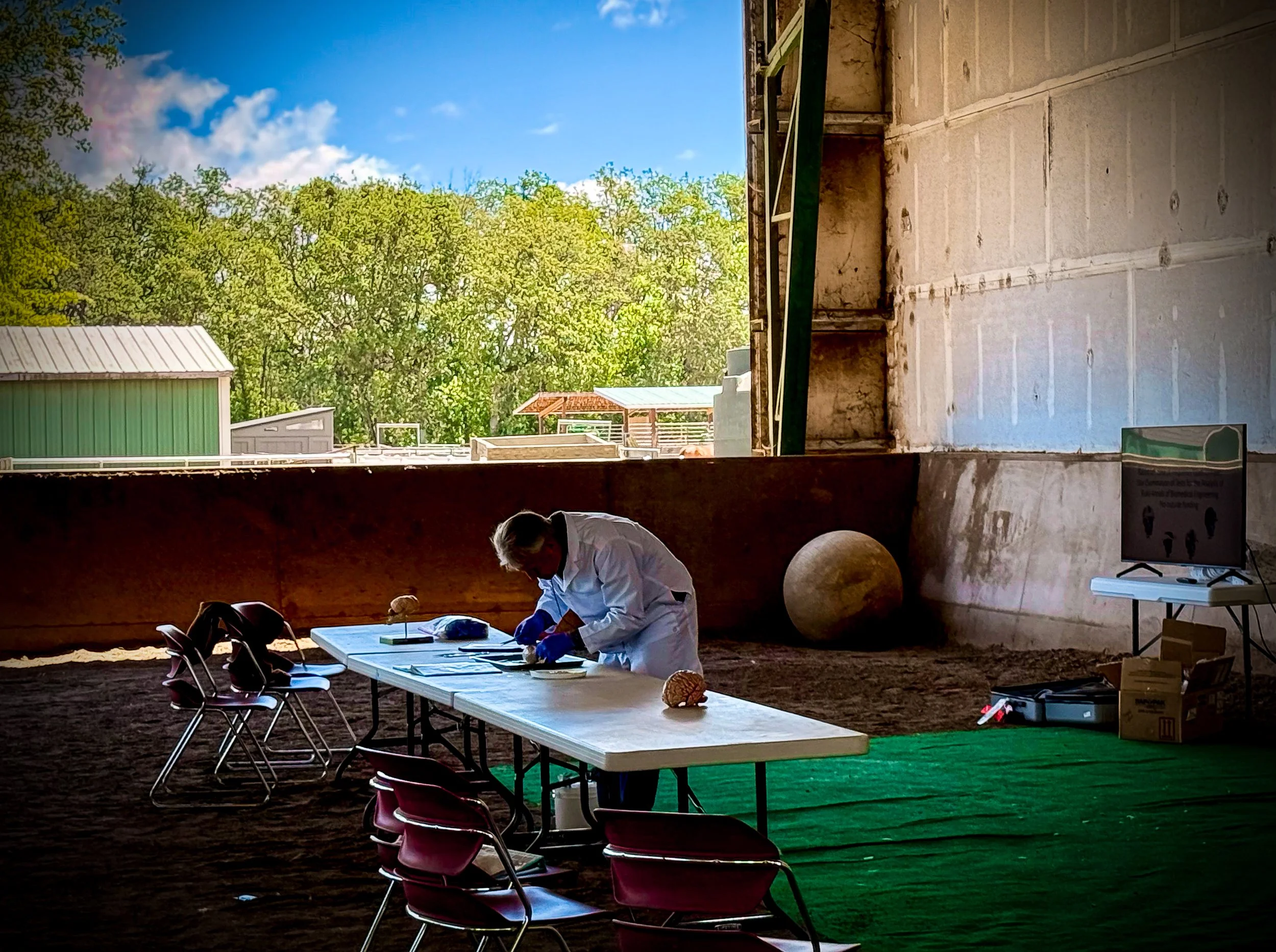
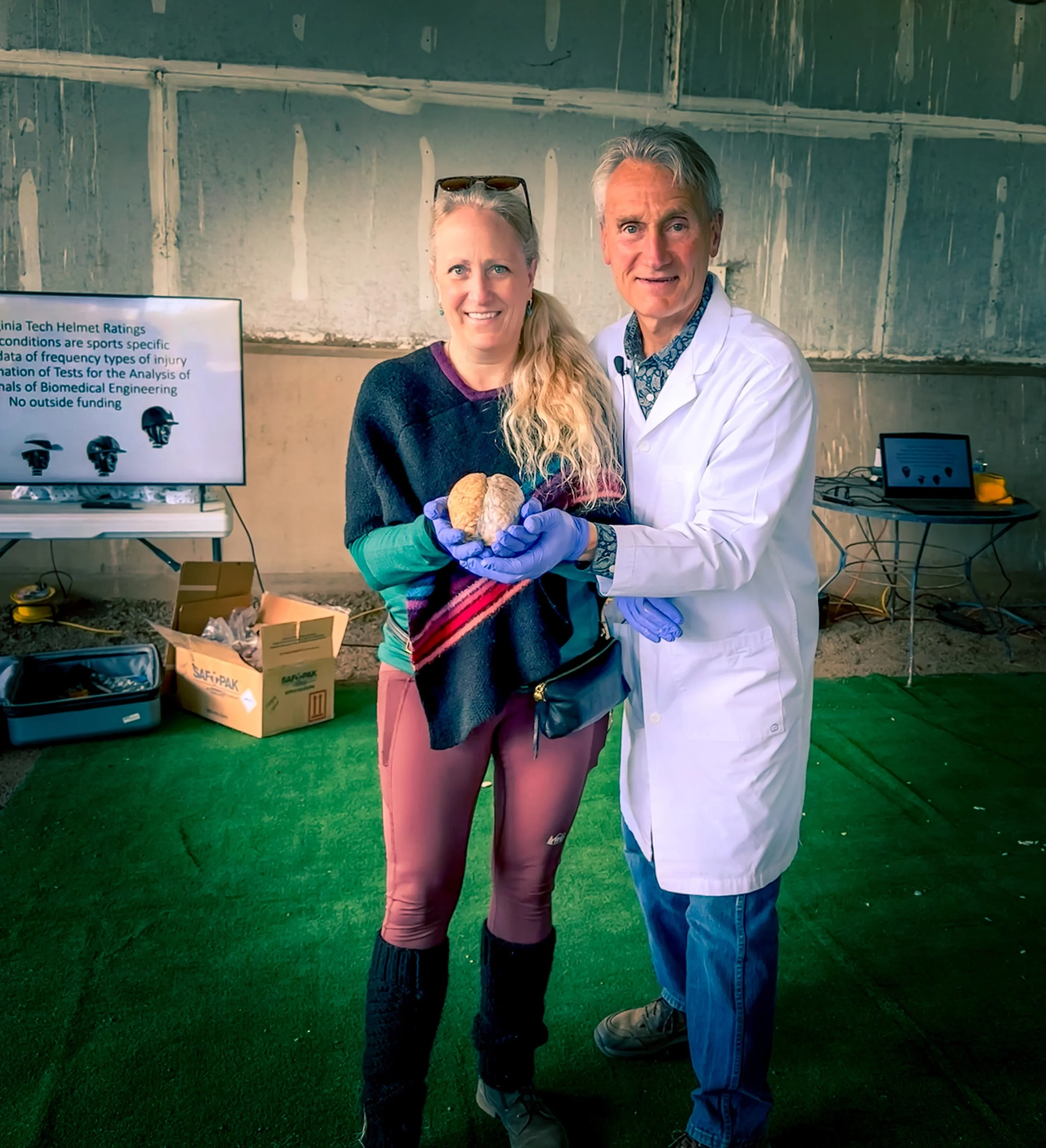
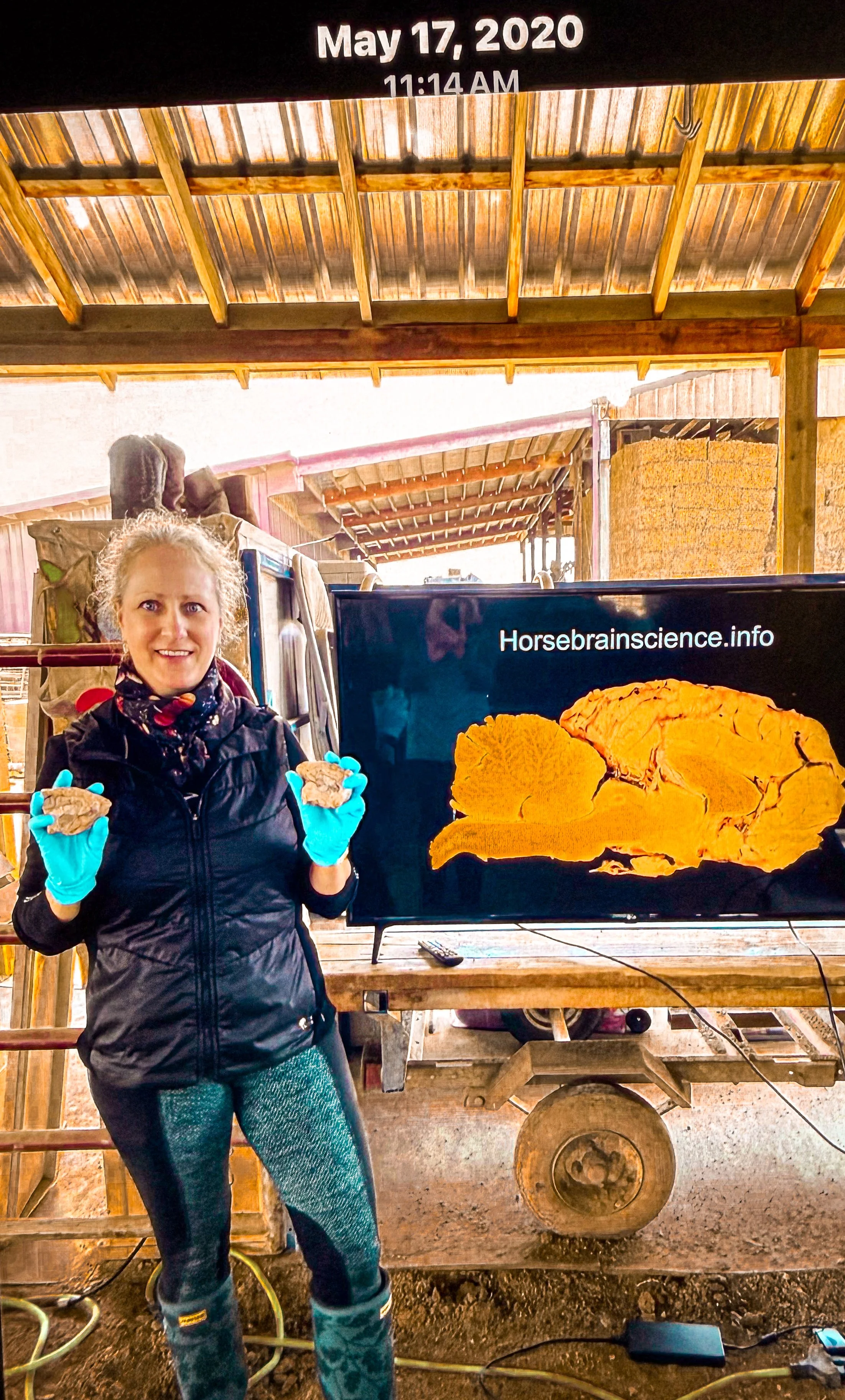
A few weeks ago, I spent two days in Southern Oregon attending Dr. Steve Peters' Horse Brain Science seminar, hosted by Kim Ewalt Horsemanship and her team.
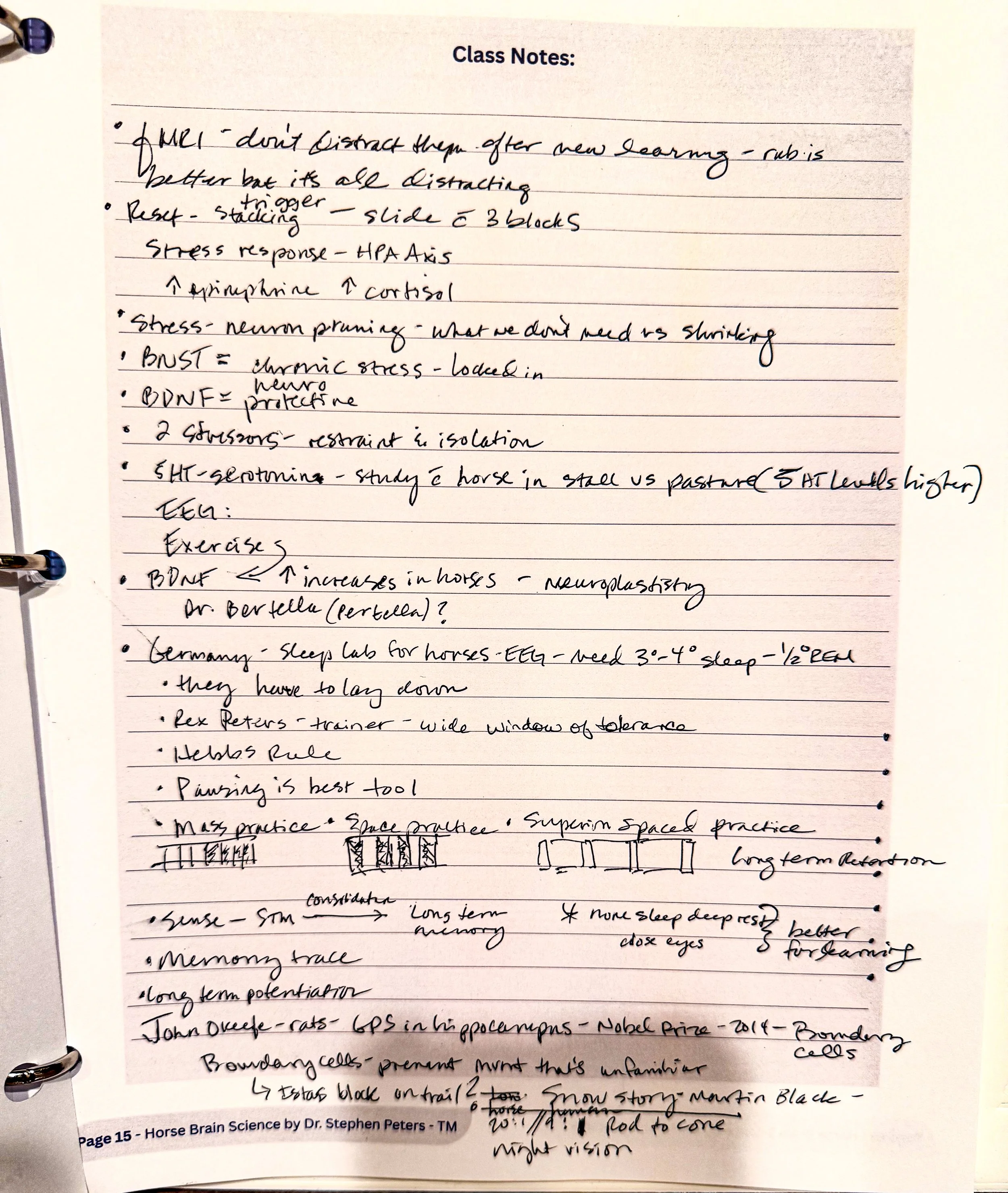
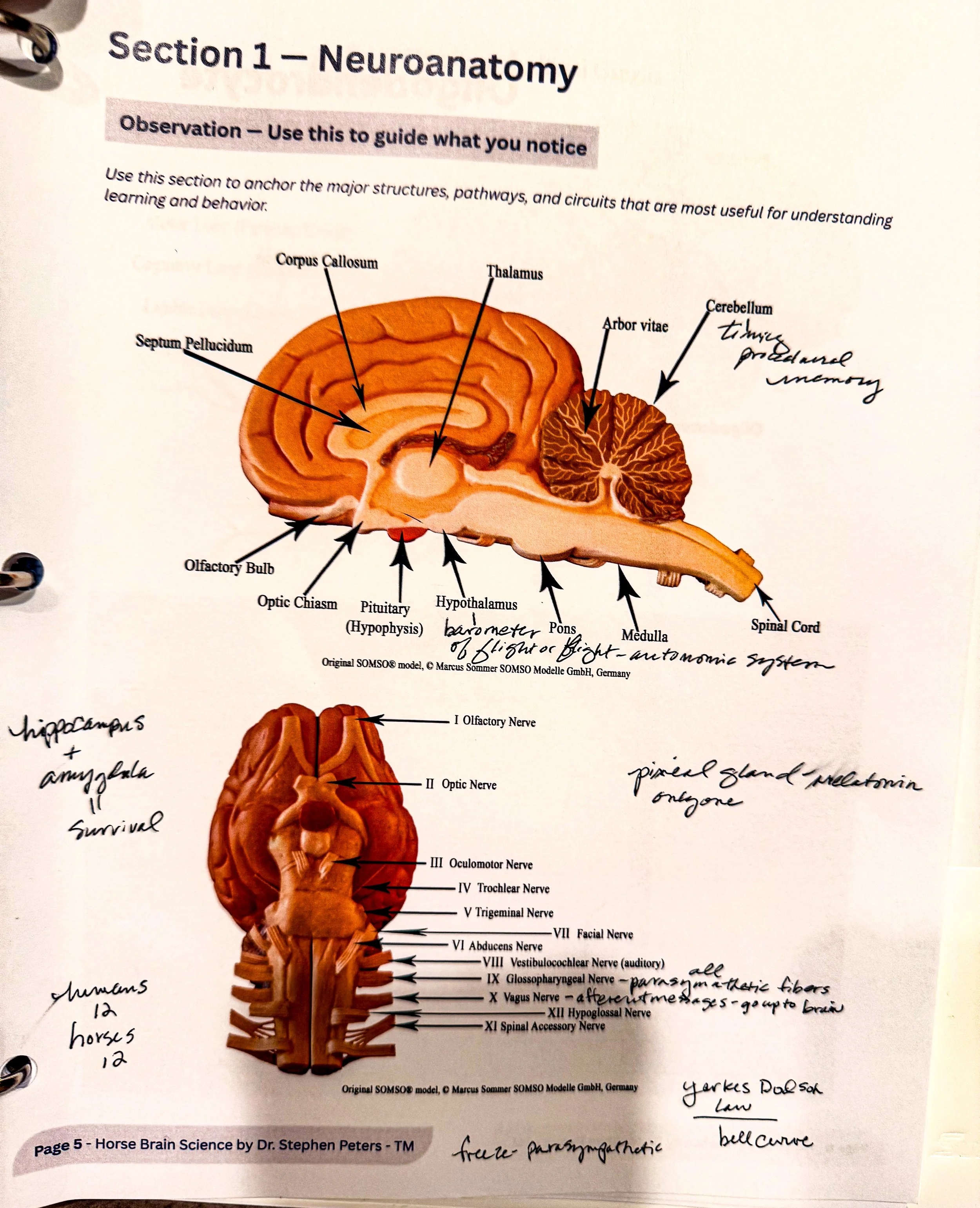
By the end of the weekend, my notebook was full of ideas. Neuroplasticity. Memory. Learning theory. Sleep. Vision. Stress physiology. The sympathetic and parasympathetic nervous systems. Boundary cells. Dwell time. Myelination.
Concepts that sounded, at times, more like a university neuroscience course than something associated with horses.
What made the seminar compelling was not the science itself. It was the way every concept was connected back to the horse. Again and again, the discussion returned to a surprisingly simple question: if we better understand how horses perceive, process, remember, and experience the world, how might that change the decisions we make for them?
This was not really a seminar about training techniques. Nor was it neuroscience for neuroscience's sake. It was a seminar about understanding.
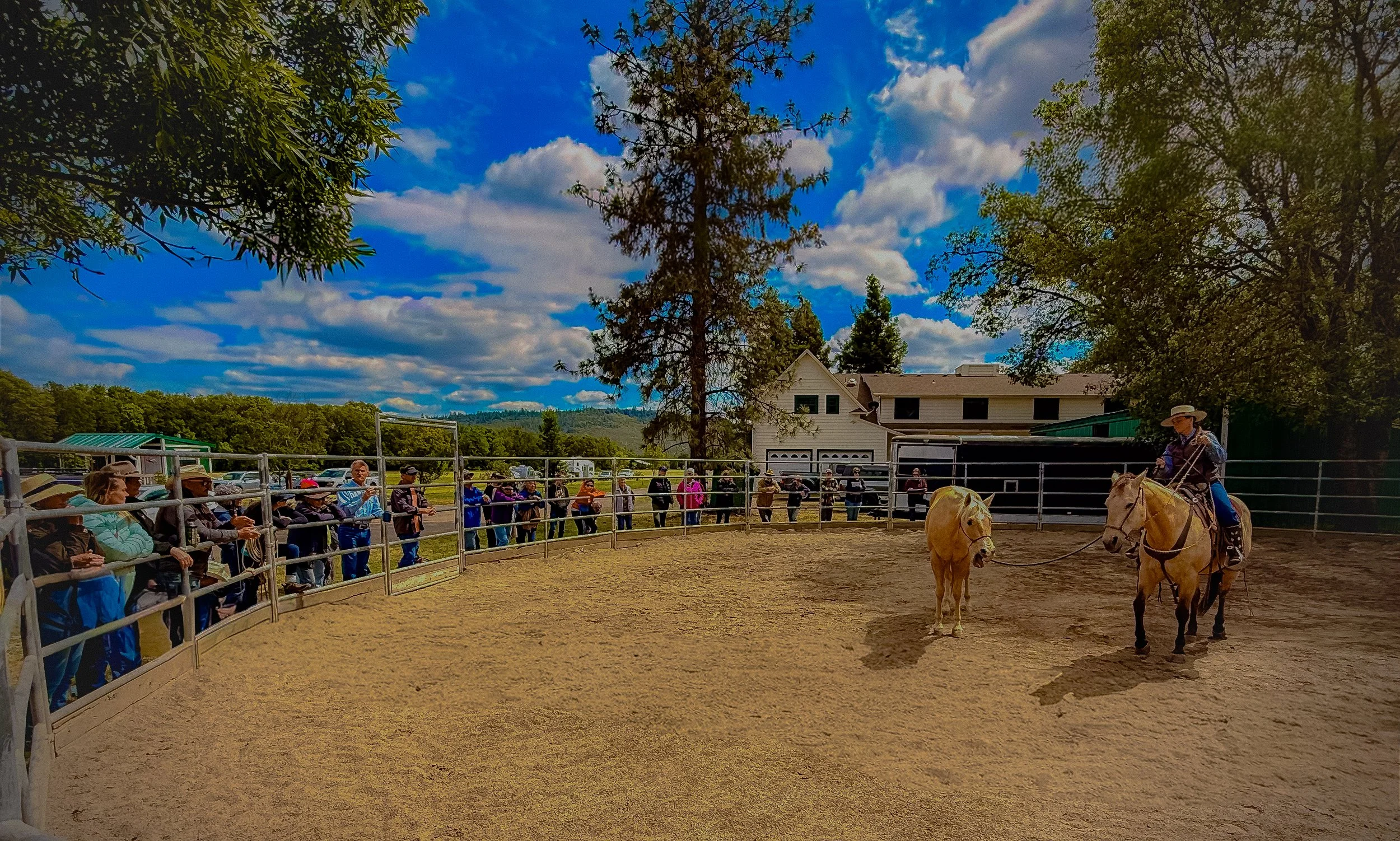
Throughout the weekend, Dr. Peters and the Kim Ewalt Horsemanship team used horse demonstrations to illustrate the nervous system in action. Questions of arousal, learning, memory formation, dwell time, and consolidation became visible in real horses facing ordinary challenges.
One horse was having difficulty accepting a fly mask. On the surface, it seemed like a simple training problem. But viewed through the lens of neuroscience, it became something much more interesting. We were watching the nervous system respond to a novel stimulus. We were watching arousal rise and fall. We were watching exposure, timing, processing, and the importance of knowing when to stop.
One phrase from the seminar stayed with me: take the amount of time you think is enough, then add some more.
The point was not to pause for the sake of pausing. It was to allow the nervous system time to process, settle, and consolidate the experience.
As I watched, I was reminded of another old horsemanship saying: "Take the time it takes, so it takes less time." What appears slower in the moment often creates faster, more durable learning in the long run.
The following weekend, I found myself at the Oregon Horse Center in Eugene for a Working Equitation show hosted by Julie Alonzo and crew.
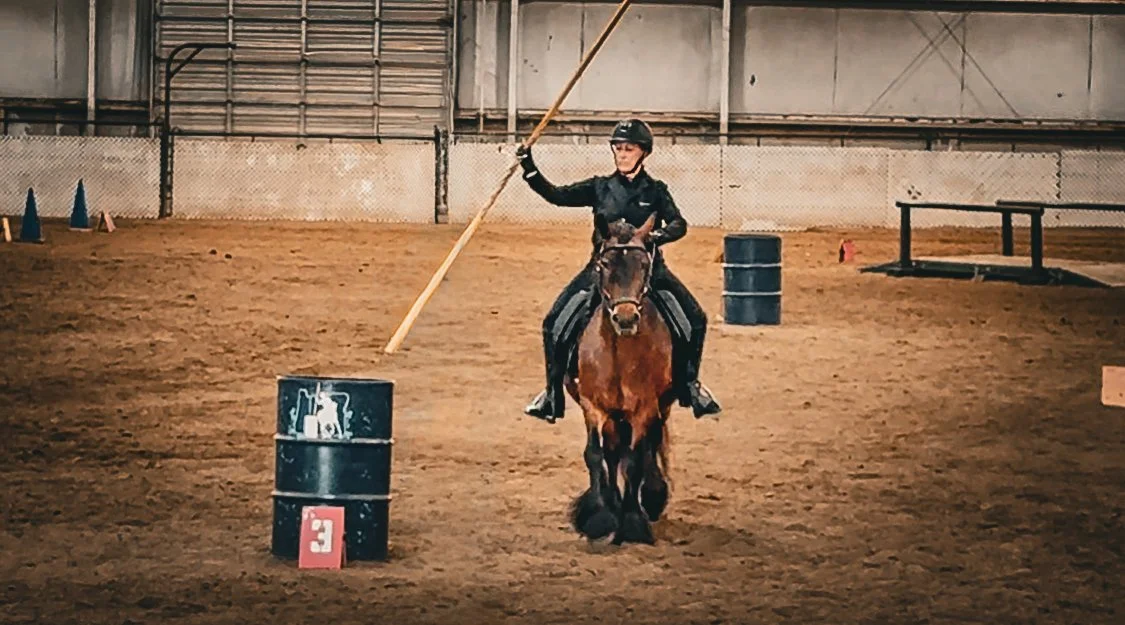
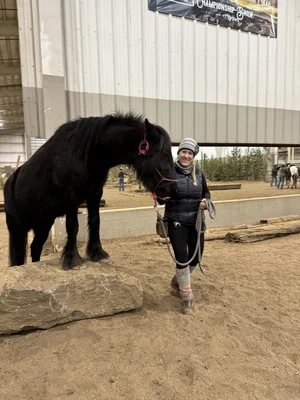
I attended with my Fell pony, JKL Istas, a discipline we have been slowly exploring together for the past three years. We were there to learn about ourselves, to better regulate stress in a show environment, to observe other horses and riders, and to keep developing our ability to read horses more thoughtfully.
What surprised me was how clearly the science from the previous weekend followed me into the arena.
I found myself thinking less about scores and ribbons and more about regulation.
As I rode Istas, I found myself paying closer attention to balance. Was she thinking? Was she processing? Did she need another repetition? Did she need me to ask less? Or did she simply need time?
At the show, I noticed riders who chose to reset rather than push. I noticed horses arriving in a new environment and expressing stress in small but understandable ways—a hesitation, a refusal, a spook in a corner, a minor rear, a horse asked for too much speed too soon in a warm-up.
Not bad horses.
Not bad riders.
Just nervous systems responding to pressure, novelty, uncertainty, and the challenge of finding balance in a busy show environment.
I also noticed partnerships that seemed to breathe together.
One of the ideas discussed repeatedly during the seminar was homeostasis—the body's ongoing effort to maintain balance amid changing circumstances. While the concept is physiological, I found myself seeing it everywhere at the show.
Not in perfection.
Not in the absence of stress.
But in the small adjustments riders and horses made together as they navigated pressure, novelty, and uncertainty.
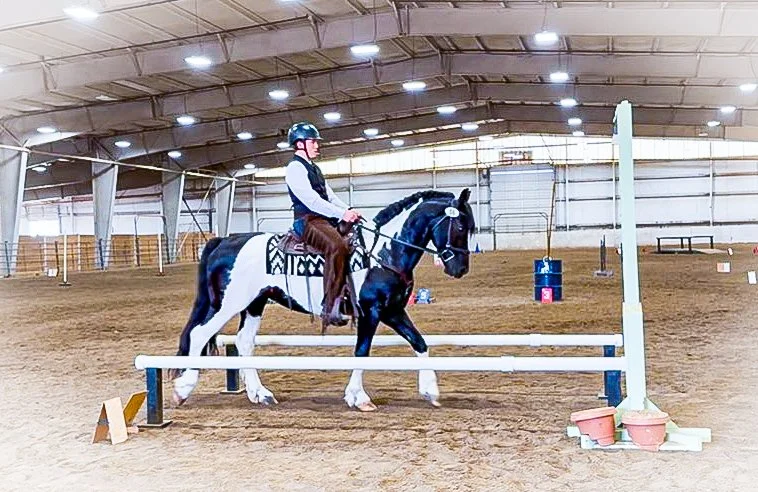
One young rider I met that weekend stayed with me. Luke House was there with Quinn, a Friesian cross stallion in training and the only stallion at the show. Quinn came to him at about eight years old as a fairly clean slate, which made their work together all the more interesting to watch.
During a break, we found ourselves talking about horses, training, the horse market, and some of the projects he is currently involved with. We also discussed a term that was newer to me at the time: Warlander, generally used for horses with Friesian and Iberian breeding.
It was helpful to hear some of the background behind Luke's philosophy and approach, then watch him compete with Quinn both before and after that conversation.
What struck me was not simply that he was riding a stallion in a busy show environment, but the quiet, balanced way he approached the work. There was room for processing. Room for adjustment. Room for reset.
Looking through the lens of the seminar, I found myself wondering whether what I was watching was learning taking place within the horse's window of tolerance. Rather than escalating pressure when questions arose, Luke seemed willing to listen, adjust, and continue the conversation.
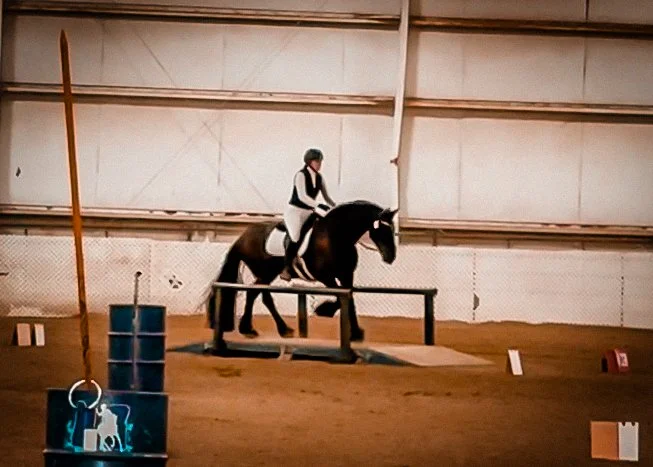
I thought, too, of Jennifer McDonald and her Friesian gelding, Indigo Sky. I first met Jennifer last year and have followed their progress since then, including watching them compete in Mountain Trail toward the end of last season. It was good to see the pair back again this year in Working Equitation and to observe how their partnership continues to develop.
Over that time, I have had the opportunity to watch them grow together in two disciplines not always associated with a tall draft-type breed: Working Equitation and Mountain Trail.
Part of what makes the partnership interesting is watching Jennifer develop a large horse to be nimble, thoughtful, and able to work safely in confined spaces while being asked for specified movements with precision, frequent changes of pace and speed, and straightness.
With a horse of that size, there is also a practical reality to consider: it is a long way down, and safety matters.
Jennifer incorporates many of the same principles I value in my own work with horses and ponies: positive reinforcement, in-hand work, careful progression, and attention to nervous system regulation. What I admire most is her self-awareness.
After one speed phase, Jennifer told me her legs had been shaking as she rode. She had wondered how Indigo might respond to that nervous energy coming from her above him, especially while being asked to handle obstacles at speed.
But it went well.
That moment stayed with me.
Not because she was nervous, but because she recognized it.
She understood that her own internal state was part of the conversation.
Rather than ignoring it, she reflected on it.
Horses do not simply respond to cues. They respond to feel, timing, tension, confidence, rhythm, and countless subtle signals that often occur below our conscious awareness.
The best riders are not necessarily those who never experience stress. They are often the riders who recognize it, regulate it, and make thoughtful adjustments before it spills over into the partnership.
Watching Luke and Quinn, Jennifer and Indigo, and reflecting on my own partnership with Istas, I found myself thinking that homeostasis is not merely something happening inside the horse's nervous system.
Sometimes it is visible in the rider as well.
Perhaps some of the finest horsemanship occurs when horse and human are learning how to return to balance together.
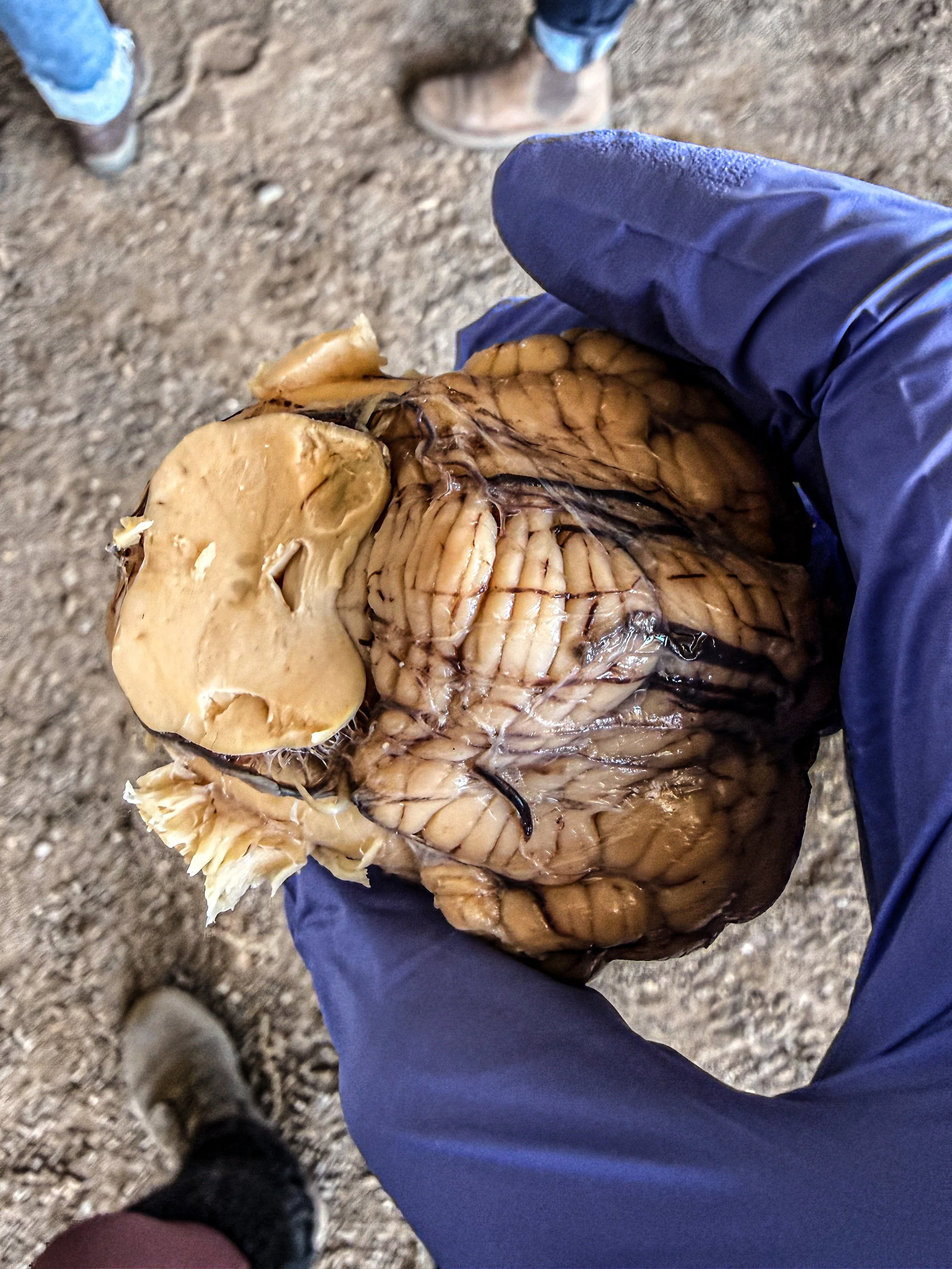
One of the most fascinating discussions during the seminar involved spatial mapping within the hippocampus. In simple terms, the horse may be carrying something akin to a biological GPS.
That discussion reminded me of a story Dr. Peters shared involving Martin Black riding through deep snow. A cattle guard lay hidden beneath the snow. Martin could not see it. The horse stopped. The horse knew.
It also reminded me of my own mare, Istas.
Last year, while horse camping, Istas became concerned about something ahead of us. I could see nothing.
Then a giant owl lifted out of the trees.
What startled me most was not the owl itself. It was the realization that she had known it was there long before I did.
During the seminar, we talked about how differently horses perceive the world. Horses are highly attuned to movement, contrast, and subtle visual disruptions that may reveal an animal hidden within camouflage.
Perhaps especially in a breed with a history of being raised in semi-feral herds on the fells of northern England, awareness, judgment, environmental sensitivity, and self-preservation were not flaws. They were necessities.
The more we understand how horses perceive the world, the more difficult it becomes to dismiss behaviors as simply naughty, stubborn, disobedient, or reactive.
The more I listened throughout the seminar, the less interested I became in controlling horses and the more interested I became in understanding them.
That may have been the most important lesson of all.
Not a training technique.
Not a neuroscience term.
A shift in perspective.
Again and again, discussions of learning, memory, stress, vision, sensory processing, and spatial awareness all seemed to lead back to the same place: better horsemanship through understanding.
Good horsemanship has always required empathy. Science may simply be giving us another way to practice it.
That Working Equitation weekend also left me thinking about another question entirely. Why do some traditional breeds seem so naturally at home in a discipline built around adaptability, partnership, emotional regulation, and problem-solving?
As I watched Istas navigate the weekend and reflected on generations of Fell ponies before her, I found myself heading down a very different line of thought.
That is a story for another day.
Six years ago, on my birthday, I attended this same seminar.
Tomorrow is my birthday again, and I find myself back in the same room, still learning.
The horses have not changed.
My understanding has changed.
Perhaps that is neuroplasticity, too.
Not arriving at an answer.
But remaining open to new questions.
I think this version keeps the article's heart intact while giving readers other horses and riders to observe alongside your own journey.
Edited and written by Jane Snar
Learn More
For readers interested in learning more about the work behind this reflection:
Horse Brain Science — Dr. Stephen Peters
https://www.horsebrainscience.info/Kim Ewalt Horsemanship
https://www.kimewalt.com/Evidence-Based Horsemanship — Dr. Stephen Peters & Martin Black
https://www.wastelandpress.net/evh/
A final note: this story may not be finished quite yet.
This fall, two special Fell ponies will be returning to Kim Ewalt Horsemanship for a more advanced Horse Brain Science seminar, with more learning, observing, and content to develop over the summer.
One of the unexpected gifts of this year’s seminar was reconnecting with people I had not seen in years, including the owner of a Fell pony I once owned, who has also signed up for the fall seminar. Horses have a way of bringing people back together, often when we least expect it.
So consider this less of a conclusion and more of a pause in the conversation. There is more learning ahead, and no doubt more stories waiting to be told.